
It's 2016. A friend won't stop talking about bitcoin, so you buy a few coins for a few hundred dollars, install a wallet on your phone and scribble the seed phrase in a notebook. Then life happens: a new phone, a new apartment, and bitcoin slips your mind.
Ten years later, bitcoin has climbed many times over. You remember those coins, look up your address on a block explorer, and there it is: every satoshi, exactly where you left it. But the notebook is nowhere to be found.
This isn't a hypothetical. It's the reality for countless early holders. So here's the question: does that fortune still belong to you?
Key takeaways
- Legally, the coins are still yours. On the blockchain, only whoever holds the private key can move them.
- Analysts estimate that millions of bitcoin may be permanently lost.
- If you bought through an exchange, recovering your account has nothing to do with a seed phrase. Don't give up yet.
- If you remember part of your seed phrase, recovery may still be possible.
- Strangers who offer to "crack" your wallet are almost always scammers.
Yours on paper, nobody's in practice
In the traditional world, a forgotten bank PIN gets reset at the branch, and a lost property deed gets reissued by the registry. There's always an institution keeping records and vouching for you.
Bitcoin doesn't work that way. There's no help desk and no "forgot password" link. The network only cares about one thing: whoever can sign with the private key can move the coins. Your seed phrase is the backup of that key. Lose the seed phrase and the device, and you've thrown the vault key into the ocean.
| Asset | If you lose your credentials | Recoverable? |
|---|---|---|
| Bank deposits | Verify your ID and reset your PIN | Yes |
| Real estate | Request a new deed from the registry | Yes |
| Coins on an exchange | Recover your account through ID verification | Yes, if the exchange still operates |
| Coins in a self-custody wallet | Only the seed phrase or private key works | Almost never |
So "who owns it?" has two answers. Legally, it's still your property. Technically, nobody controls it anymore. Those coins will sit on the blockchain forever, untouchable by anyone, including you.
Real stories of bitcoin you can see but can't spend
The most famous case is James Howells from Newport, Wales. In 2013, he accidentally threw away a hard drive holding the keys to about 8,000 bitcoin, and it ended up in a local landfill. For more than a decade he asked the city council for permission to dig. They refused, and in January 2025 a UK court threw out his legal claim.
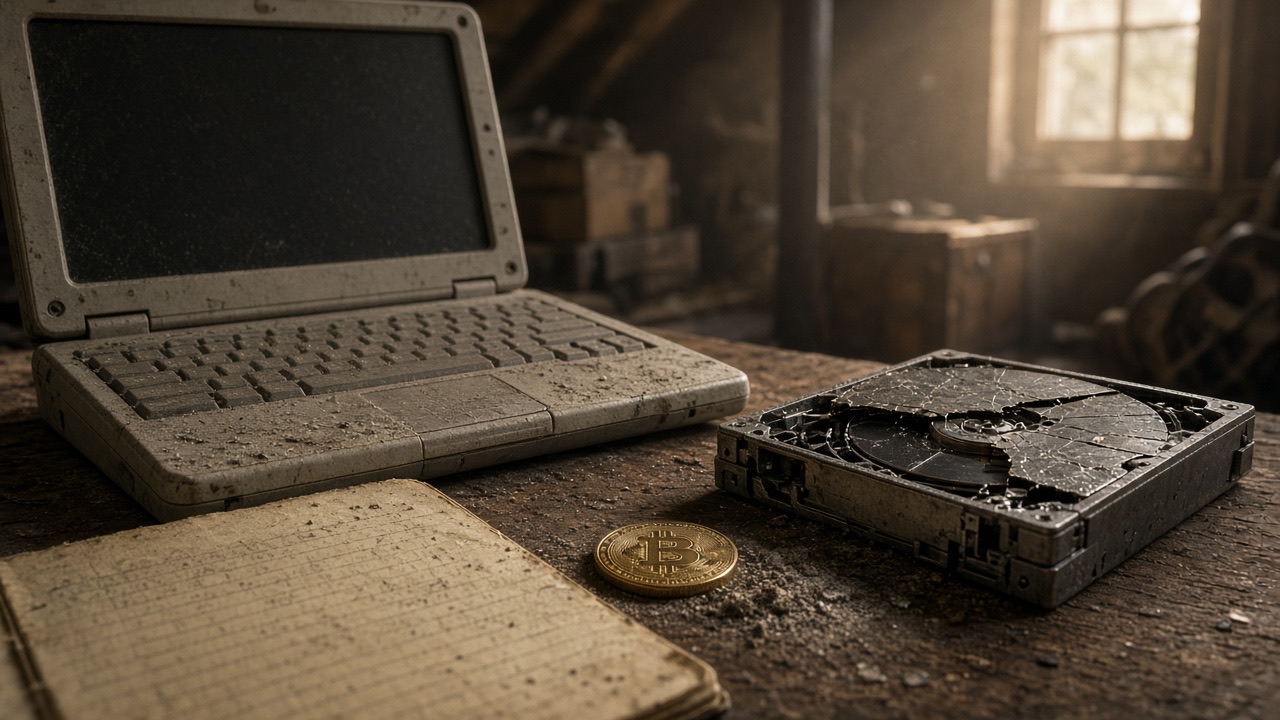
Then there's programmer Stefan Thomas, whose keys to about 7,002 bitcoin are stored on an encrypted USB drive that permanently locks after 10 wrong password attempts. According to a 2021 New York Times report, he had used 8 of them, leaving just 2.
These are just the headlines. In 2020, blockchain analytics firm Chainalysis estimated that around 3.7 million bitcoin may be permanently lost, nearly a fifth of the total supply. Bitcoin is capped at 21 million coins, and far fewer than that are actually in circulation.
Don't give up yet: a recovery checklist
Before you write those coins off, work through these steps calmly. Plenty of people find their bitcoin at step one.
Step 1: Remember where you bought it. If you bought on an exchange and never withdrew to your own wallet, your coins may still be sitting in that account. In that case you need your exchange login and ID verification, not a seed phrase. Search your old email for sign-up confirmations and trade receipts. This only works if the exchange is still operating; some early platforms have shut down.
Step 2: Gather every old device.
Old phones, laptops, hard drives, USB sticks: find them all. If you used a desktop wallet like Bitcoin Core, your keys may be in a file called wallet.dat. A few rules:
- Don't format or factory-reset anything, and don't install random "recovery" software.
- If a device still boots, disconnect it from the internet first, then check which wallet apps it has.
- If a drive is damaged, use a reputable data recovery lab, and don't tell them it contains crypto.
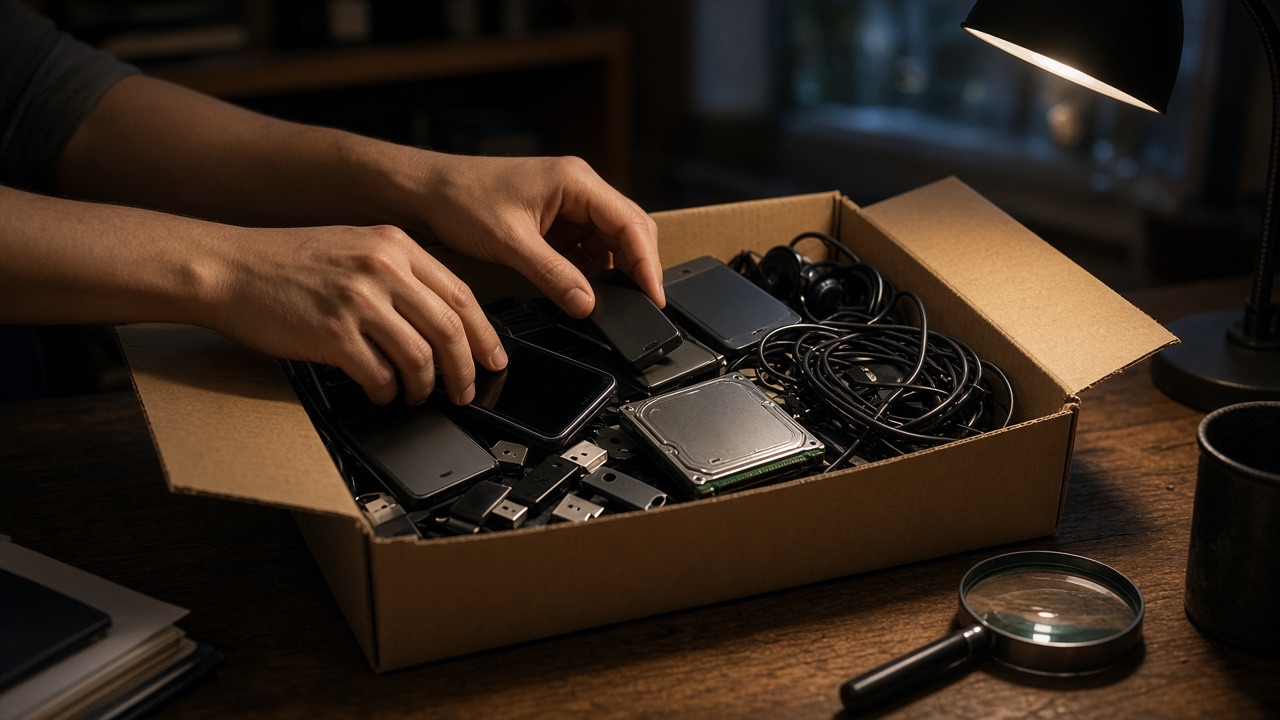
Step 3: Search your paper and digital trail. Old notebooks, planners, scraps of paper tucked into books, even photos in your camera roll might hold a seed phrase you jotted down years ago. Search old email and cloud storage for words like "seed," "wallet," "backup" and "recovery."
Step 4: A partial seed phrase still gives you a chance. Seed phrases use a fixed list of 2,048 words, and the final word includes a checksum. If you're missing one or two words, or have all the words in the wrong order, offline open-source tools may be able to recover the wallet by trying combinations:
| What you still have | Chances of recovery |
|---|---|
| All 12/24 words in the right order | Restore immediately |
| Missing 1 word | Very high: at most 2,048 combinations |
| Missing 2 words | Good, but much more computing time |
| All words, wrong order | Possible with 12 words; practically impossible with 24 |
| Only the address, no words, no devices | Close to zero |
This takes some technical skill. Do it on a computer that's disconnected from the internet, and move the coins to a brand-new wallet the moment you succeed.
Beware the "we'll recover your bitcoin" scam
Post about your lost coins online and the DMs arrive within hours: "Our expert team can crack your wallet." "Pay a small fee upfront, then we split the recovered funds."
Keep this in mind:
- Bitcoin's cryptography can't be "hacked" open. Claims of secret cracking tools are almost always scams.
- Any stranger who asks for the words you do remember can empty the wallet the moment they recover it.
- Legitimate wallet recovery services typically charge a percentage only on success and sign a formal contract. Anyone demanding payment upfront is almost certainly a scammer.
Starting today, don't become the next cautionary tale
If you hold crypto right now, spend 30 minutes on this:
- Locate your seed phrase. Go look at it now. Make sure it's there, legible and complete.
- Keep at least two copies. Store them in two different secure places, protected from fire and water. A metal backup plate is worth considering.
- Do a recovery drill. Restore your wallet on a spare device to prove the backup actually works.
- Leave instructions. Not the seed phrase itself, but a note explaining what you own, where the backups are and who to contact. Give it to someone you trust.
FAQ
Do lost bitcoin ever get recycled or redistributed?
No. The protocol has no mechanism for reclaiming coins. Lost bitcoin stays at its address forever. Economically, it's permanently out of circulation, which makes the remaining supply scarcer.
I know my wallet address. Can I prove the coins are mine?
You may be able to show you used the address, for example with old purchase records, but that means nothing on-chain. Without the private key you can't sign a transaction, and no authority can transfer the coins for you.
My old exchange went bankrupt. Can I get my coins back?
It depends on the bankruptcy process. After Mt. Gox collapsed in 2014, creditors waited roughly a decade before repayments began. If your old exchange failed, look for an official claims process.
Is a photo of my seed phrase a good backup?
No. Phones and cloud accounts can be hacked, synced to the wrong place or lost when you upgrade. Keep your seed phrase offline; our crypto wallet guide explains how.
Summary
Bitcoin locked behind a lost seed phrase is still legally yours, but technically it's a vault nobody can open. That's what makes bitcoin both remarkable and unforgiving: it gives you complete control, and with it, complete responsibility.
If you still have leads, work through the checklist calmly and ignore anyone who wants money upfront. If your coins are safe, take five minutes today to check your backup. This article is for education only and isn't investment advice.

Covers Bitcoin: the protocol, mining, the halving cycle and network development, writing from the white paper and verifiable on-chain data.
Our editorial principles →
 David Mitchell
 Michael Carter