
"My exchange went bankrupt." "I upgraded my phone and my wallet was gone." "I downloaded a wallet app from a search ad, and the next morning my balance was zero."
These stories all come back to the same thing: not understanding what a wallet actually protects. This guide clears that up from scratch and ends with a checklist you can follow today.
Key takeaways
- Wallets don't hold coins. Coins live on the blockchain; your wallet holds the private keys.
- Custodial wallets are convenient but require trust. Self-custody gives you control and full responsibility.
- Hot wallets suit everyday use; cold wallets suit long-term storage of larger amounts.
- Your seed phrase is the master key. Write it down offline, and treat anyone who asks for it as a scammer.
- Before sending, test with a small amount and check the address and network carefully.
What's actually inside a wallet?
It's natural to think a crypto wallet holds coins the way a leather wallet holds cash. It doesn't. Your coins are recorded on the blockchain. What your wallet stores is the private key: the one piece of proof that you're allowed to move the funds at a given address.
Picture a row of glass safety deposit boxes. Each has a public number (your address); anyone can drop something in or see what's inside. But only the person with the key (your private key) can take anything out. Lose the key and the box stays locked forever. Let someone copy it and they can empty it.
Custodial vs. self-custody wallets
| Custodial (e.g. an exchange account) | Self-custody (e.g. mobile or hardware wallet) | |
|---|---|---|
| Who holds the keys | The platform | You |
| Forgot your password | Recover it through ID verification | Only your seed phrase can restore access |
| Main risks | Hacks, frozen accounts, insolvency | Losing your seed phrase, scams, malware |
| Best for | Active trading, getting started | Long-term holding, using DeFi |
Exchange failures aren't hypothetical. In 2014, Mt. Gox, then the world's largest bitcoin exchange, collapsed after losing roughly 850,000 BTC. In November 2022, FTX unraveled within days, freezing customer funds.
Neither option is perfect; the point is knowing which risk you're taking. A common middle ground: keep trading money on an exchange and long-term holdings in your own wallet.
Hot wallets vs. cold wallets
- Hot wallets keep keys on an internet-connected device, like a mobile app or browser extension. They're quick and convenient for small amounts and DeFi, but more exposed to malware and phishing.
- Cold wallets keep keys offline. The most common type is a hardware wallet, which signs transactions inside the device so your keys never touch your computer or phone. They're the better choice for larger, long-term holdings.
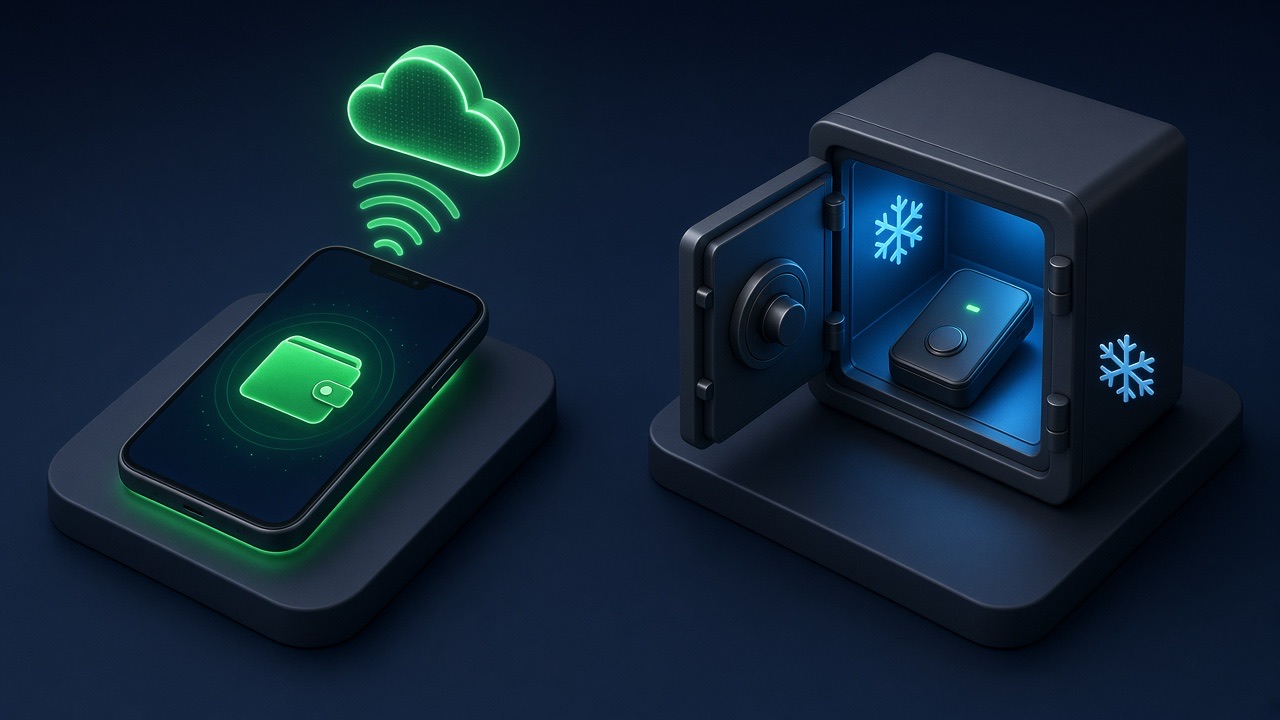
The recommended setup is hot and cold together: most of your crypto in cold storage, like a safe at home, and a small amount in a hot wallet, like the cash in your pocket.
When downloading a wallet:
- Only use the official website or official app store listing. Skip sponsored search results and never install apps sent to you in chats.
- Fake wallet apps often look identical to the real thing, but quietly send your seed phrase to scammers.
- Buy hardware wallets directly from the manufacturer or an authorized reseller, never secondhand. Check that the packaging hasn't been tampered with. A device that arrives with a pre-written seed phrase is always a scam.
Your seed phrase: the master key
Most wallets generate a 12- or 24-word seed phrase (the BIP-39 standard, drawn from a list of 2,048 words). A 12-word phrase has 2¹²⁸ possible combinations, which is impossible to guess. But the flip side is brutal: anyone who sees your seed phrase can restore your wallet on any device and take everything.
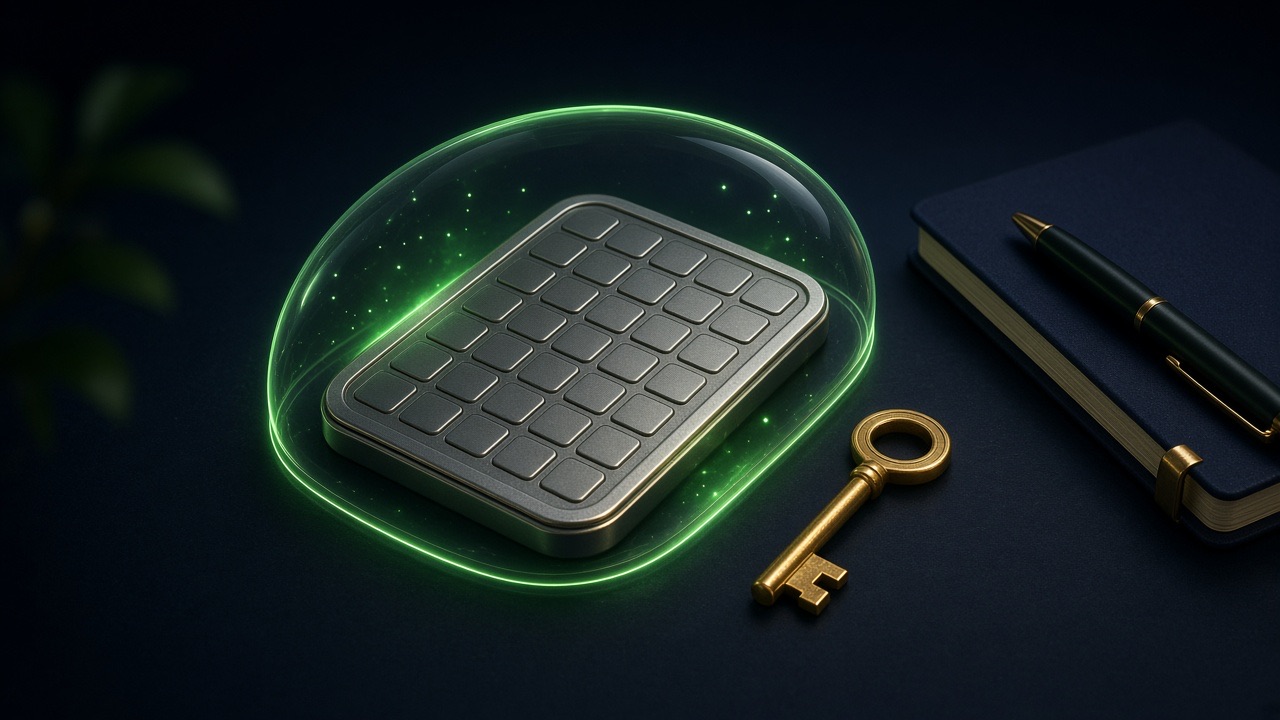
Seed phrase do's and don'ts:
| Do | Don't |
|---|---|
| Write it on paper or stamp it into metal | Take a screenshot or photo |
| Copy every word in order, then double-check | Store it in the cloud, notes apps or email |
| Keep it somewhere safe from fire and water | Paste it into any chat or messaging app |
| Consider a second copy in another location | Share it with anyone, including "support" |
One rule to remember: anyone who asks for your seed phrase is a scammer. That includes people claiming to be exchange support, wallet staff, tech help or a friendly stranger in a group chat. No legitimate wallet will ever ask for it.
For extra protection, advanced users can add a passphrase (sometimes called the "25th word"), so a stolen seed phrase alone can't restore the wallet. Larger holdings can use a multisig wallet, which requires several keys to approve a transaction. Both add complexity, and forgetting your passphrase locks you out just as surely as losing your seed phrase.
Habits to build before every transfer
Blockchain transfers are final. There's no refund button. These habits prevent almost every costly mistake:
- Send a test transaction first. The first time you send to a new address, send a small amount and confirm it arrived. One extra fee buys peace of mind.
- Check the whole address. Don't just glance at the first and last few characters; scammers generate look-alike addresses on purpose (known as address poisoning).
- Match the network. The same token, like USDT, exists on multiple chains. Deposits and withdrawals must use the same network, or your funds may be hard to recover.
- Trust the hardware wallet screen. Malware can swap an address on your computer. Always confirm the address and amount on the device itself.
- Watch your clipboard. Some malware replaces copied addresses. Double-check after you paste.
FAQ
I lost my phone. Is my crypto gone?
No. Your coins are on the blockchain, not on your phone. With your seed phrase, you can restore the wallet on a new device. Move your funds to a fresh wallet afterward in case someone breaks into the old phone.
What if my hardware wallet breaks or gets lost?
Restore it with your seed phrase. The device is just a tool for holding keys; the seed phrase is the real backup. That's why it matters more than the hardware itself.
Can one seed phrase cover multiple blockchains?
Yes. Most wallets derive Bitcoin, Ethereum and other addresses from the same seed phrase. Wallets support different chains, though, so restore with one that supports the chains you use.
Does my exchange account count as my wallet?
Not really. The balance in your exchange account is the platform's record of what it owes you, and the platform holds the keys. You can withdraw while it's running normally, but if something goes wrong, your funds can be frozen.
Summary
Choosing a wallet means choosing which risks you're willing to carry. Understand the difference between private keys, seed phrases, hot wallets and cold wallets. Download only from official sources, keep your seed phrase offline, and make test transactions and careful address checks a habit. Do that, and you'll avoid nearly every loss caused by mistakes and scams.
Want to know what scammers are trying right now? Read our scam prevention guide. This article is for education only and isn't investment advice.

Covers security and beginner guides: wallet safety, key management, phishing and approval risks, helping readers avoid the most common ways to lose funds.
Our editorial principles →
 Sarah Collins

 David Mitchell