Ask most people where to keep their most valuable possessions and they'll say a bank safe deposit box. Vault doors, round-the-clock cameras, professional security: it beats a drawer at home every time.
But talk to longtime crypto holders and you'll notice something odd. Plenty of them would rather stamp their seed phrase into a metal plate and hide it at home than hand it to a bank.
Are they being paranoid, or do they see risks most people miss?
Key takeaways
- Safe deposit boxes are excellent against theft, but come with limited access, limited protection and the possibility of being frozen.
- Home storage is convenient and fully under your control, but faces burglary, fire and family members throwing things away.
- Both have a single point of failure. The real danger is keeping your only backup in one place.
- The better answer is splitting your backups across locations, ideally with a passphrase or multisig.
- Wherever you store it, make sure someone you trust knows how to find it.
What safe deposit boxes do well
To be fair, safe deposit boxes have real advantages:
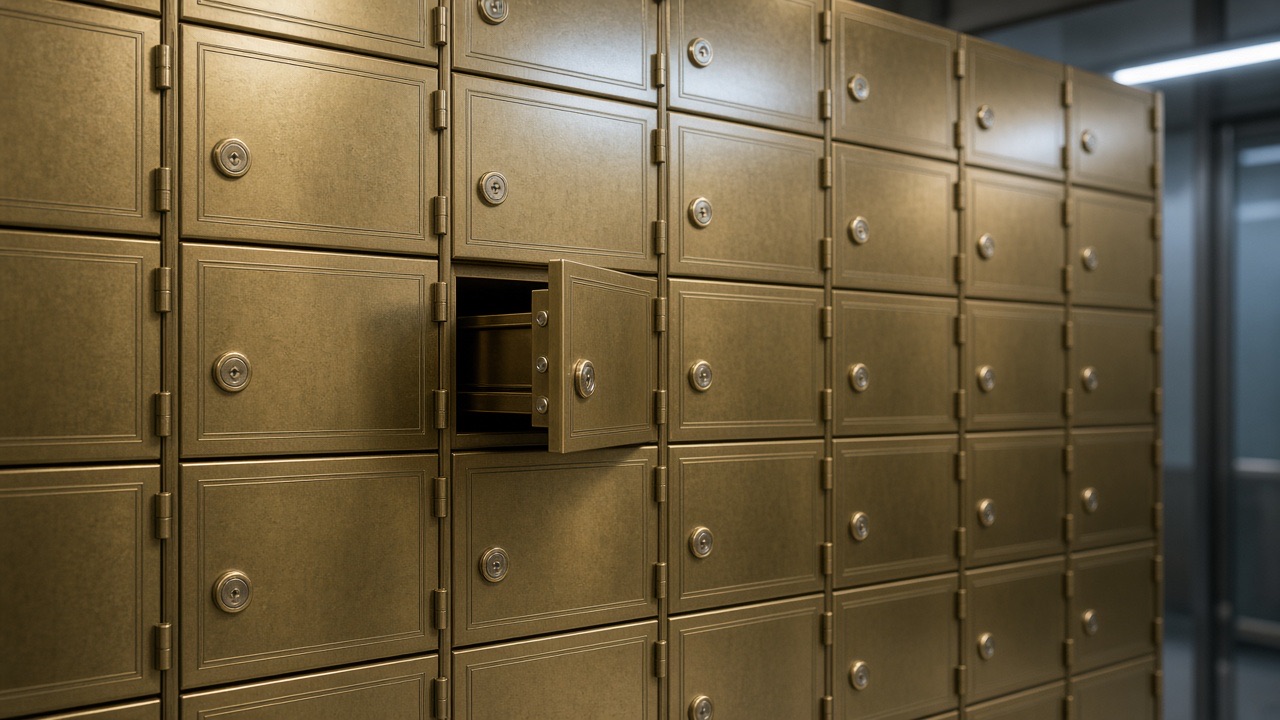
- Serious theft protection: vault-grade security far beyond any home.
- Better disaster protection: vaults are usually built with fire and moisture in mind.
- Safe from household mishaps: nobody tosses it out while cleaning or loses it during a move.
So what's the concern?
Concern 1: you can't always get to it
You can only open a safe deposit box during branch hours. Nights, weekends and holidays are out. If the market crashes or your wallet is compromised and you need to move funds right now, you're stuck waiting for Monday morning.
Many banks have also been scaling back or discontinuing safe deposit services, and when a branch closes or relocates, customers have to move their belongings.
Concern 2: if something goes wrong, protection is limited
Many people assume anything in a bank is insured. It isn't. Banks typically don't know what's in your box and don't insure the contents. In the US, FDIC insurance doesn't cover safe deposit box contents at all.
Disasters do happen. When Hurricane Sandy hit New York in 2012, some underground bank vaults flooded and damaged the contents of customers' boxes. For a seed phrase written on paper, one soaking can be the end of it.
Concern 3: control isn't entirely yours
You hold the key, but opening the box requires the bank's cooperation. That means:
- The box can be frozen or seized under legal process, and you can't access it until that's resolved.
- After the holder dies, family members may need a death certificate and court documents before the bank lets them in, which can take months.
- Renting a box requires identification. The bank knows you have one and roughly how often you visit.
For bitcoin holders who value full self-custody, keeping the key to your self-sovereign money in a place that needs someone else's permission to open feels like a contradiction.
So is home automatically safer?
Not at all. Home storage has its own risks:
- Burglary and home invasion: if people know you hold a lot of crypto, your home becomes a target.
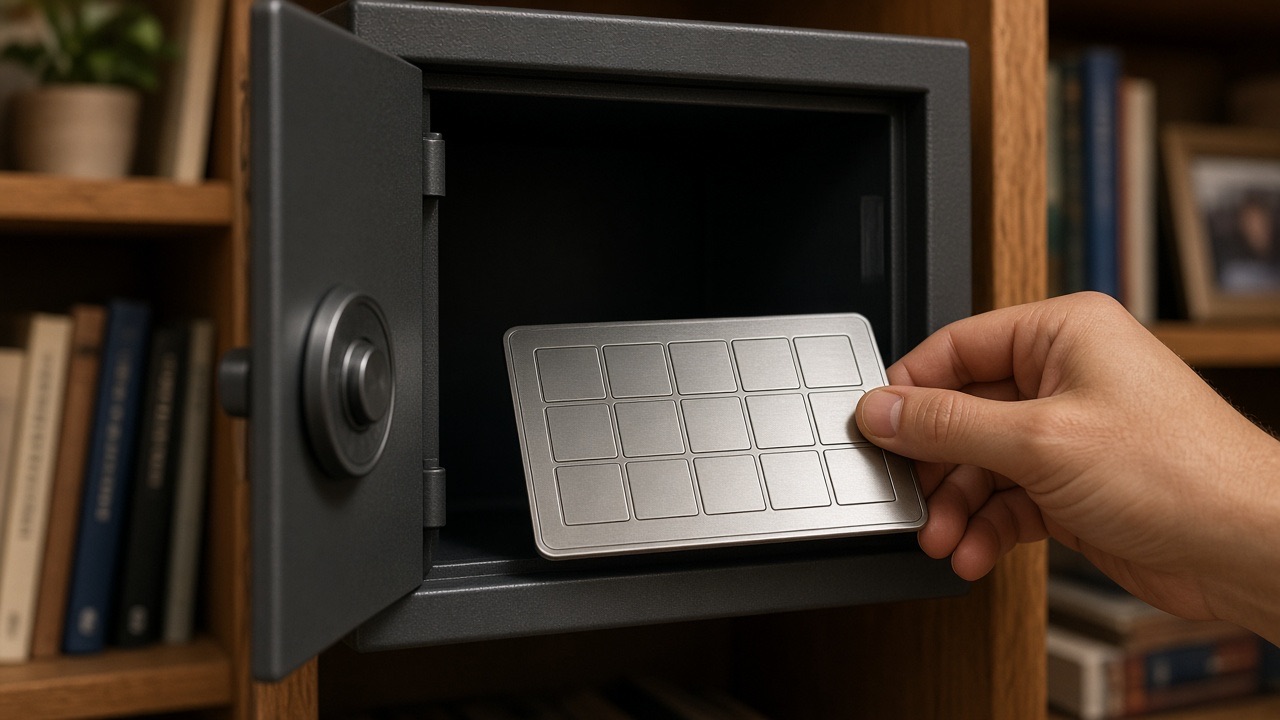
- Fire and flooding: paper burns instantly; metal plates hold up much better but aren't indestructible.
- Family mishaps: a slip of paper covered in random English words is easy to mistake for trash during cleaning, renovations or a move.
- Forgetting your own hiding spot: hide it too well and, years later, even you can't find it.
Side-by-side comparison
| Home (safe or hiding spot) | Bank safe deposit box | |
|---|---|---|
| Theft | Fair; depends on the hiding spot and safe quality | Very good |
| Fire and water | Depends on the safe and backup material | Good, but not absolute |
| Access anytime | Yes | Business hours only |
| Control | Fully yours | Requires the bank; can be frozen |
| Privacy | Good, if you stay quiet | ID required; the bank knows |
| Inheritance | Easy if family knows the location | Requires probate paperwork; slow |
| Cost | One-time safe purchase | Annual rental fee |
Both options have weak spots. The real question isn't "where?" but "why only one place?"
A better plan: don't put all your eggs in one basket
Experienced holders usually combine several layers:
- At least two backups in separate locations. For example, one in a fireproof safe at home and one in a bank box or with a trusted relative. If one location fails, the other saves you.
- Metal backups. Metal seed plates hold up far better than paper against fire, water and corrosion.
- Add a passphrase. Store the seed phrase in one place and the passphrase somewhere else. Anyone who finds the seed phrase alone still can't open your real wallet.
- Consider multisig for larger amounts. With a 2-of-3 setup, you might keep one key at home, one in a bank box and one with someone you trust. Losing or leaking any single key doesn't put your funds at risk.
- Stay quiet. Don't flex your holdings on social media or discuss them with people who don't need to know.
And wherever you keep your backups, leave clear instructions for someone you trust: where the backups are, how to find them and who to call if something happens to you.
FAQ
Should I encrypt or split my seed phrase before putting it in a safe deposit box?
It's worth considering. Pairing it with a passphrase, or using multisig or split backups, means no single copy can restore your wallet on its own. The more complex the setup, though, the more important it is to document and practice it so you don't lock yourself out.
Can bank employees open my box?
Normally, opening a box requires your key and identity verification. But under certain legal circumstances, such as a court order, unpaid fees or estate proceedings, a box can be opened without you present.
Can I keep a backup with a friend or relative?
Yes, as part of a split setup. Choose someone genuinely trustworthy and stable, and ideally pair it with a passphrase so they can't restore the wallet on their own.
What should I look for in a home safe?
Look for a fire rating, plenty of weight or the ability to bolt it to the floor or wall, and place it somewhere inconspicuous. A safe protects against fire and opportunistic theft; real security comes from having more than one backup.
Summary
Crypto holders who avoid safe deposit boxes aren't doubting the vault door. They care about access when they need it, control over their own assets and certainty in worst-case scenarios. Home storage offers that freedom, but brings theft, disasters and accidental loss into the picture.
The best answer isn't one or the other. It's spreading backups across locations, layering protections and leaving your family a clear guide. For more storage tips, read our crypto wallet guide. This article is for education only and isn't investment advice.

Covers security and beginner guides: wallet safety, key management, phishing and approval risks, helping readers avoid the most common ways to lose funds.
Our editorial principles →
 David Mitchell
 Sarah Collins