
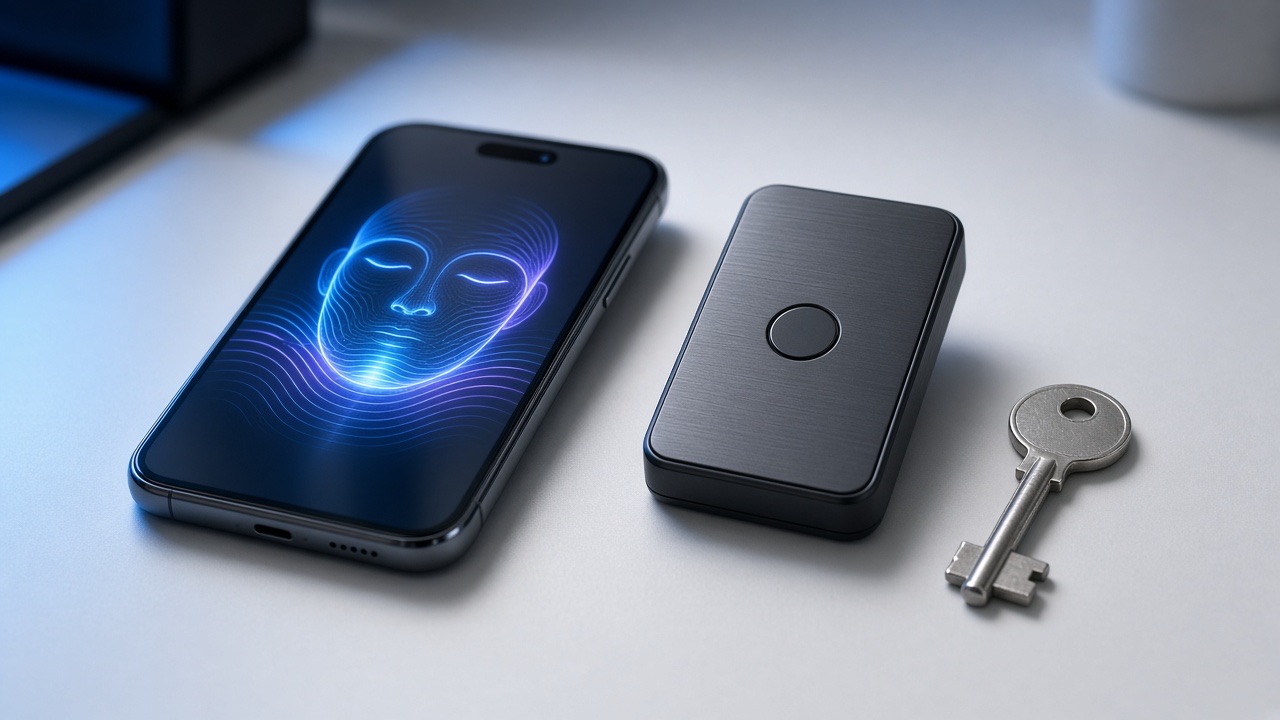
Consider the contrast. Your phone unlocks with your face. Your banking app uses your fingerprint, with text-message codes and fraud monitoring behind every transfer. Meanwhile, the bitcoin in your wallet, possibly worth more than your house, is protected by a piece of paper with 24 English words on it.
That paper can burn, get soaked, be thrown out by a family member or be memorized by someone who glances at it once. In 2026, is that really sensible security design?
The answer isn't simple. Seed phrases have strengths that are hard to replace and flaws that are hard to ignore. Let's look at where they came from and what better options exist today.
Key takeaways
- The seed phrase standard (BIP-39) dates back to 2013. Its goal was to make private keys easy for humans to write down and back up.
- Its biggest strengths: universal, offline and independent of any company. Its biggest weaknesses: a single point of failure and a steep learning curve.
- The problem usually isn't the 24 words themselves. It's relying on a single seed phrase.
- Multisig, split backups, smart contract wallets and social recovery are filling the gaps.
- There's no perfect setup, only one that matches your holdings and skills.
Where seed phrases came from
A bitcoin private key is essentially a 256-bit random number, which looks like a long, meaningless string of letters and digits when written out. Asking ordinary people to copy, check and store something like that is a recipe for mistakes.
The BIP-39 standard, proposed in 2013, fixed that by converting the random number behind your keys into 12 or 24 words from a fixed list of 2,048 English words. Words are far easier to copy and check than gibberish, and the last word includes a checksum, so most copying errors get caught.
Almost every major wallet adopted the standard. That means a seed phrase created in one wallet can be restored in another, so you don't lose your funds if a wallet company goes under.

Why it makes sense
Seed phrases are easy to criticize, but they've lasted over a decade for good reasons:
- No company required: no servers, no accounts. If your wallet maker disappears, your funds are still safe.
- Fully offline: a sheet of paper or a metal plate can't be hacked remotely.
- A universal standard: nearly every wallet supports it, so you can switch freely.
- Secure enough: a 12-word phrase has about 2¹²⁸ possible combinations. Brute-forcing that isn't realistic with any computing power in sight.
In other words, seed phrases are nearly flawless at defending against remote attacks and platform failures.
Why it doesn't make sense
The weaknesses are just as clear:
| Problem | What it looks like |
|---|---|
| Single point of failure | Lose your one seed phrase and you can't recover; leak it and you're robbed |
| Steep learning curve | Beginners struggle with keys, seed phrases and addresses, and make costly mistakes |
| Social engineering magnet | Fake support, fake airdrops and fake wallets almost all target seed phrases |
| Hard to store physically | Paper burns and soaks; home storage risks theft; bank boxes limit access |
| Hard to inherit | Don't tell your family and they can't inherit; tell them and you risk a leak |
| Can't be revoked | Once exposed, all you can do is move your funds. There's no "report lost card" |
These problems share one root cause: a single seed phrase is both your full authority and your only backup. Whoever has it has everything; whoever loses it loses everything.
Better options in 2026
The good news is that the industry has been working on this for years. Each of these approaches tackles the single-point-of-failure problem:
| Approach | How it works | Pros | Limits |
|---|---|---|---|
| Seed phrase + passphrase | Add a custom password on top of your seed phrase | The seed phrase alone can't open your wallet | You can forget the passphrase too |
| Multisig wallet | Several keys; a set number must sign (e.g. 2-of-3) | No single point of failure; great for large holdings and inheritance | More complex to set up and use |
| Split backups | Divide recovery info into shares (e.g. 3-of-5) | Losing or leaking a few shares is fine | Needs a wallet that supports the standard |
| Smart contract wallets | Permissions defined in code, e.g. Ethereum account abstraction (ERC-4337, live on mainnet since 2023) | Spending limits, allowlists, recovery contacts | Mainly on smart contract chains; contract risk |
| Social recovery | Choose trusted "guardians" who can help restore access | No seed phrase to guard; recoverable if lost | Depends on your guardians being reliable |
| MPC wallets | The key is split across devices or providers that sign together | Feels like a normal app; no complete key exists anywhere | Some designs depend on a provider |
None of these aim to eliminate seed phrases entirely. They add a layer of protection on top, or replace one key with several.
So which should you choose?
| Your situation | Suggested setup |
|---|---|
| New to crypto, small amounts | Learn on a reputable platform, or use a hot wallet with a properly backed-up seed phrase |
| Long-term holder, moderate amounts | Hardware wallet + metal seed backup, with at least two copies in separate places |
| Large holdings | Hardware wallet + passphrase, or a multisig wallet |
| Planning for inheritance | Multisig or split backups, plus legal documents and instructions for your family |
| Frequent DeFi user | Hot/cold split: savings in cold storage, spending money in a hot wallet with limits |
FAQ
Are 24 words more secure than 12?
In theory, 24 words offer more combinations, but 12 words are already impossible to brute-force. Real-world losses come from leaks and lost backups, not guessing. How you store your phrase matters far more than its length.
Are seedless wallets safer?
Not necessarily. Seedless wallets are easier to use, but their security depends on the design: where key shares live, whether they rely on a company and how recovery works if something goes wrong. Understand the recovery process before you trust one.
Can I store my seed phrase in a password manager?
It's convenient, but it puts your seed phrase in an online environment. If your master password leaks or your device is infected, your funds are at risk. Not recommended for significant amounts.
Will quantum computers crack seed phrases?
Today's quantum computers are nowhere near capable of threatening bitcoin's cryptography, and researchers are already working on quantum-resistant approaches. For everyday users, phishing and social engineering remain the far more immediate threat.
Summary
Twenty-four English words may look primitive, but they remain extremely reliable against remote attacks and platform failures. Their real flaw is concentrating full authority and your only backup in a single point.
The sensible move isn't abandoning seed phrases. It's no longer relying on just one: add a passphrase, store copies separately and use multisig or split backups when the stakes justify it. For the basics of safe storage, read our crypto wallet guide. This article is for education only and isn't investment advice.

Covers Ethereum and DeFi: smart contracts, gas, Layer 2, and how decentralized exchanges and lending protocols work, and where they can fail.
Our editorial principles →
 Sarah Collins

 David Mitchell